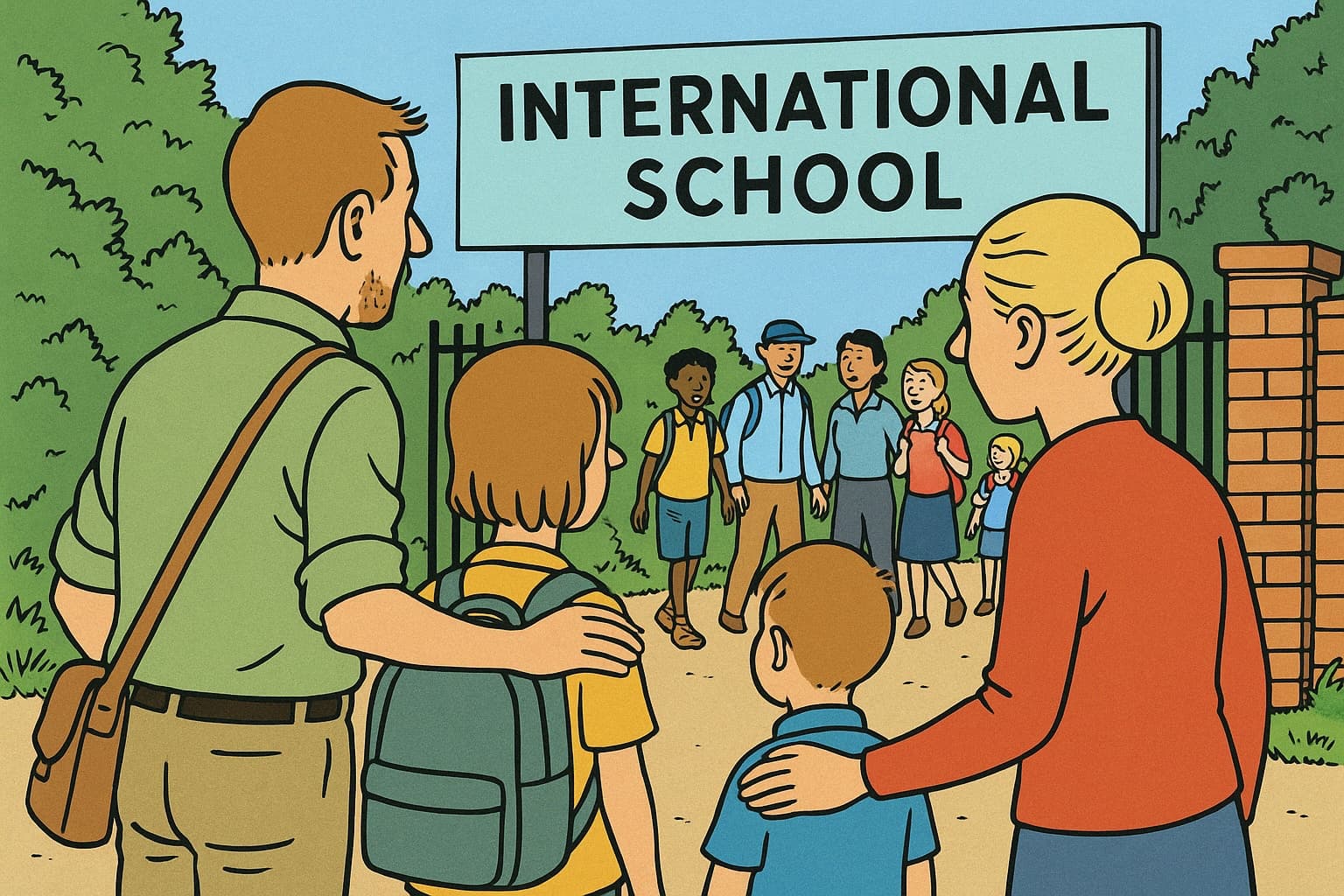
When the Bennetts, a British family with three children aged 7, 11, and 15, moved from Surrey to Nairobi for a long-term work assignment, they were excited by the adventure—but also anxious about the unknowns. The children had been in UK schools their whole lives, thriving in a familiar environment with a predictable structure, strong support systems, and a culture they instinctively understood.
Settling into life in Kenya, they were met with warmth and hospitality, but the transition to local schooling brought surprises. The younger two adjusted quickly, charmed by their classmates and the more social, relational rhythm of school life. But for their eldest, 15-year-old Sophie, things were harder. She found the school day more intense, the curriculum unfamiliar, and expectations around discipline and classroom participation vastly different.
Her teachers, though supportive, had different assumptions about independence and self-expression. Homework loads felt heavier, and peer culture was more layered than expected. Even everyday language and interactions—like how to address teachers or navigate class hierarchies—took some getting used to.
Despite the challenges, the Bennetts are slowly finding their rhythm. But the experience has raised important reflections about how deeply schooling is embedded in culture, and how adjusting goes far beyond just swapping textbooks.
 What are the biggest cultural and academic adjustments for students coming from foreign schools to Kenya? Have you experienced or witnessed a similar transition? What helped—or made it harder? Let’s share insights